

How to Draw an Old Ford Truck
In this step by step drawing tutorial, we will show you how to draw an old Ford truck – a very beautiful retro car from the Ford company.
Earlier, we have repeatedly shown how to draw trucks. In addition, we have already shown how to draw an old truck, but here we will focus specifically on the details inherent in old Ford trucks.
And in fact, we’ll be using similar drawing techniques here. However, there are some distinctive features that will be covered in this guide.
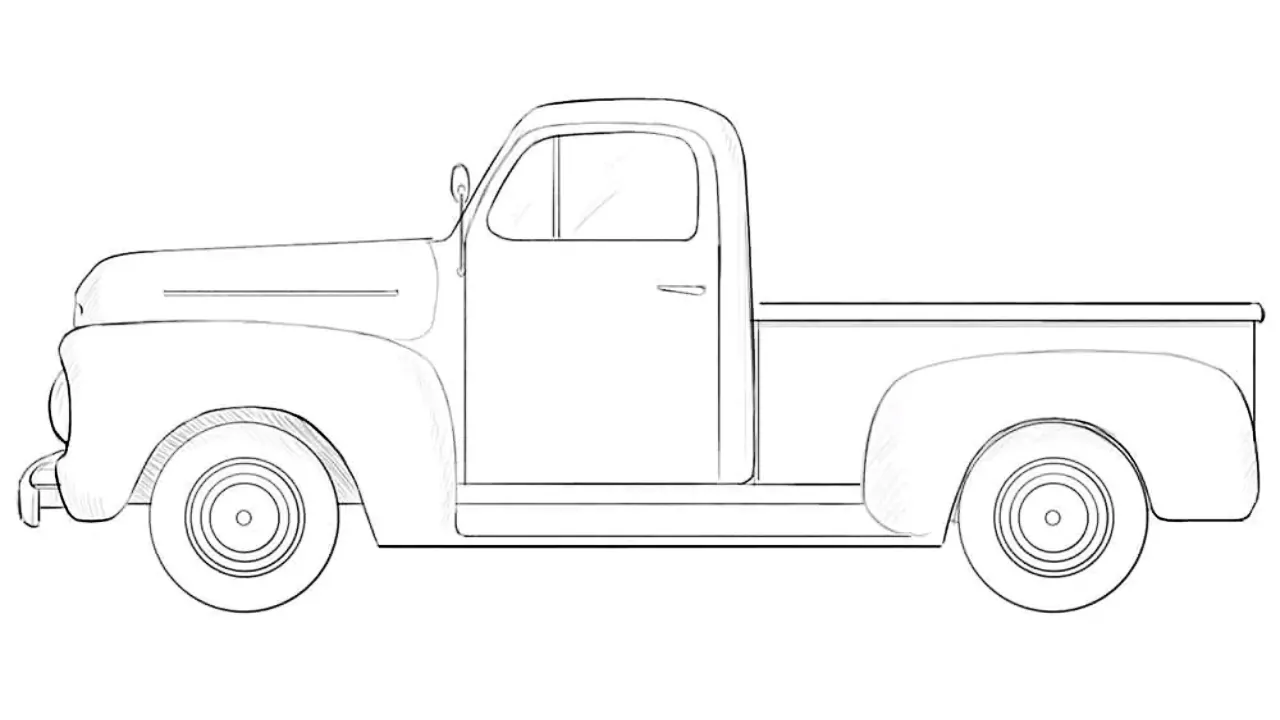
How to draw an old Ford truck: step-by-step tutorial
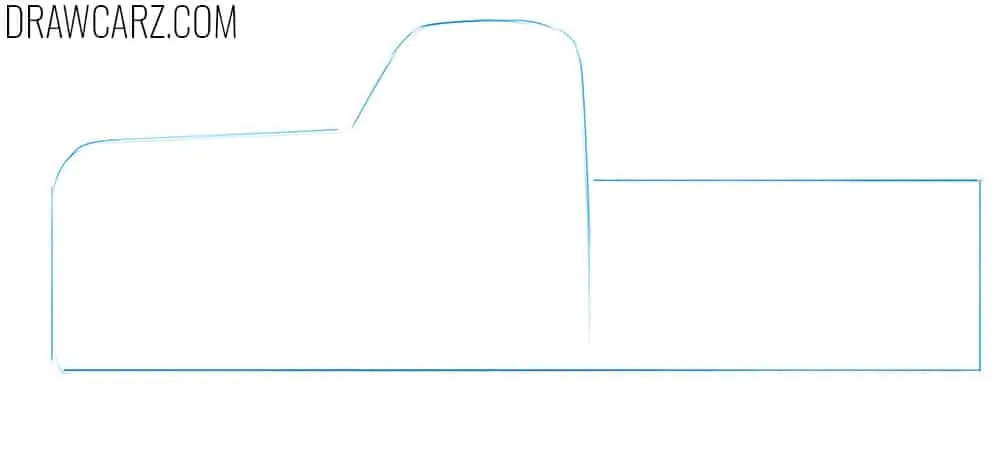
Step 1 – Map the silhouette showing the cab and cargo
First of all, with very smooth and light lines, depict the silhouette of the old Ford pickup truck. The silhouette should be visibly divided into a cab at the front and a cargo area.
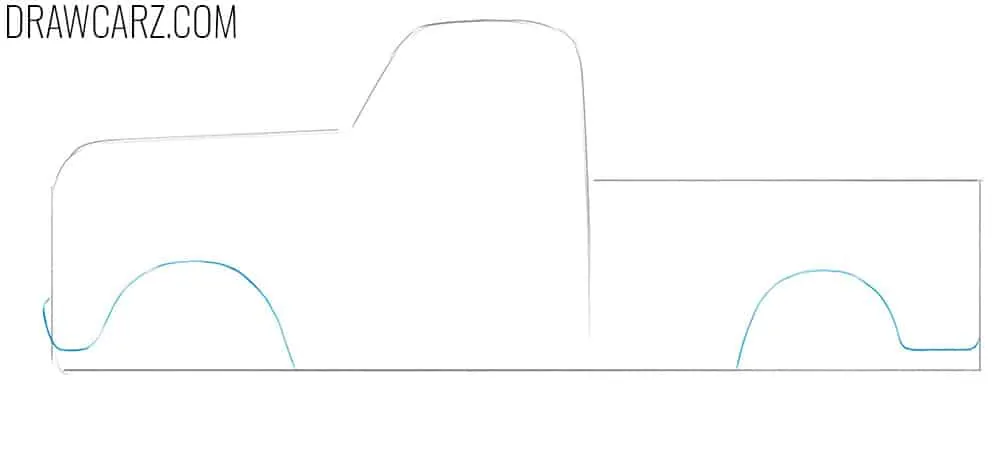
Step 2 – Mark the wheel arches and vintage bumpers
Now with the help of two smooth lines depict the wheel arches. In the same stage, depict the bottom edges of the front bumper and the rear lower edge of the cargo compartment.
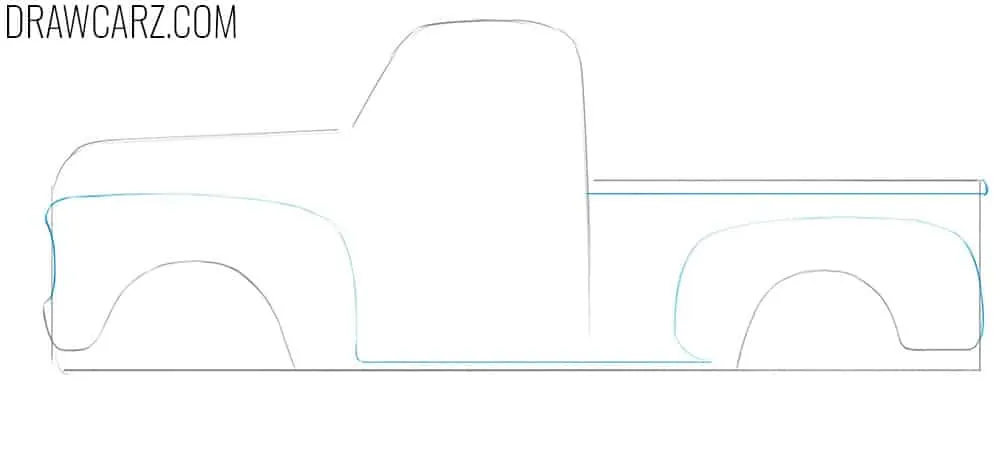
Step 3 – Add the massive fenders and cargo edge
Use very smooth lines to depict massive and rounded fenders. Next, use a straight and clear line of the step to connect the front and rear fenders. Don’t forget to depict the top edge of the side of the truck.
Step 4 – Draw out the old door of the Ford truck
Depict a vertically elongated door with smooth and rounded lines. Depict a window at the top of the door, the top line of which should follow the top line of the roof.
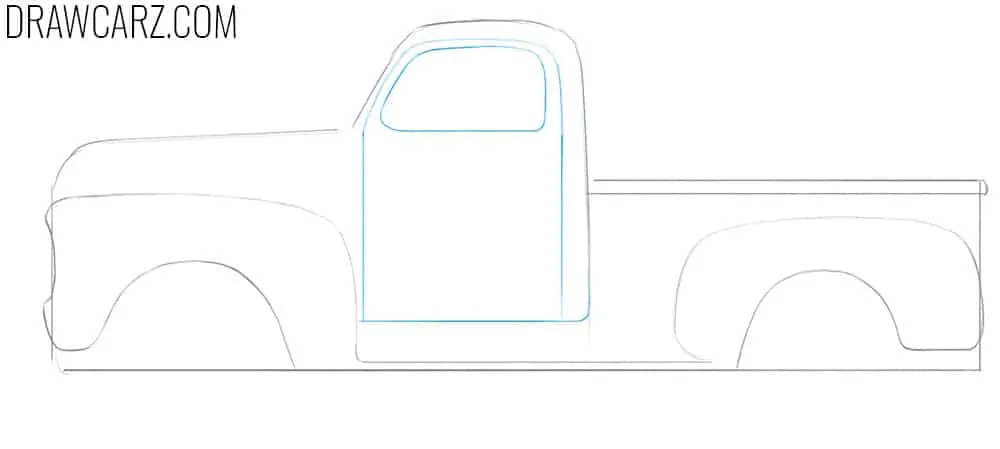
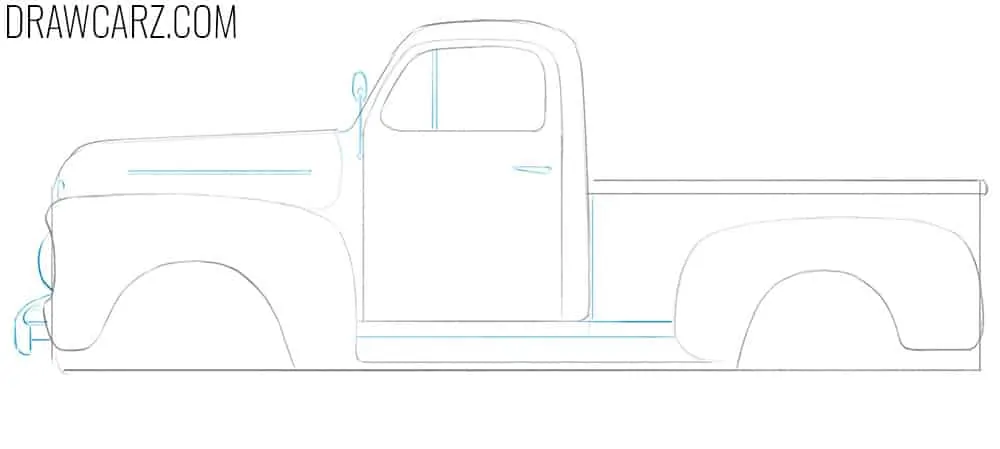
Step 5 – Add vintage details to your Ford truck
Depict a strip in the window frame with a couple of simple lines. Next, depict a convex headlight and a metal bumper underneath. In the same stage, depict the door handle and rearview mirror.
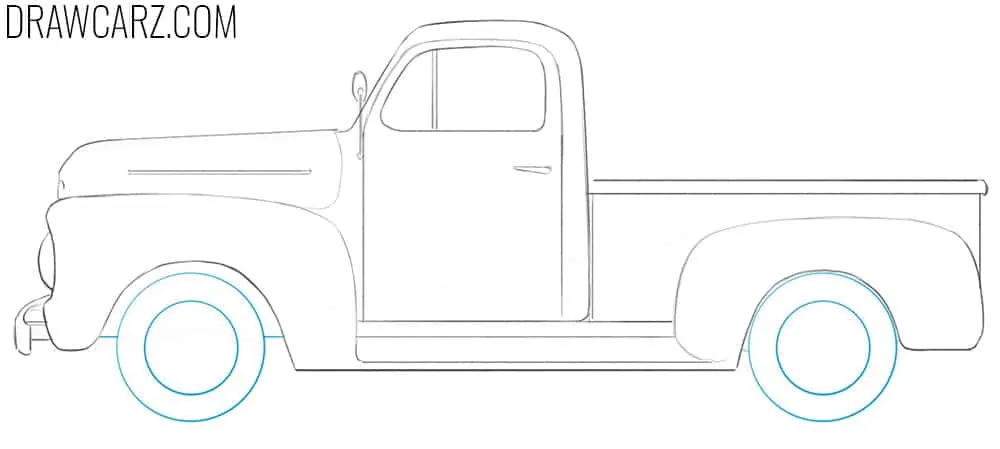
Step 6 – Erase guides, add the wheels and rims
Carefully erase all construction lines from the drawing of the old ford truck. Next, depict the wheels. After that depict the rims inside them, which should have a perfectly round shape.
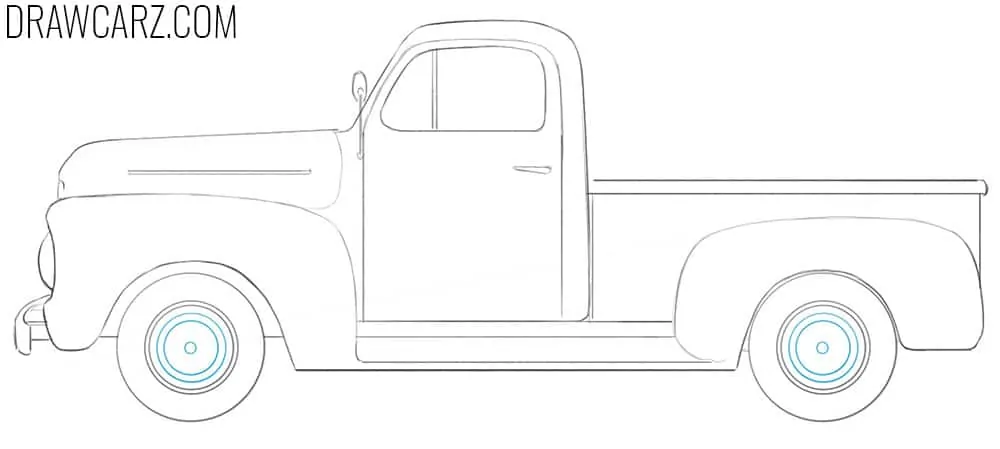
Step 7 – Draw the old fashioned rims of your Ford truck
Depict some circles within the outlines of the rims from the previous stage. To check the proportionality of the image, look at it through a mirror.
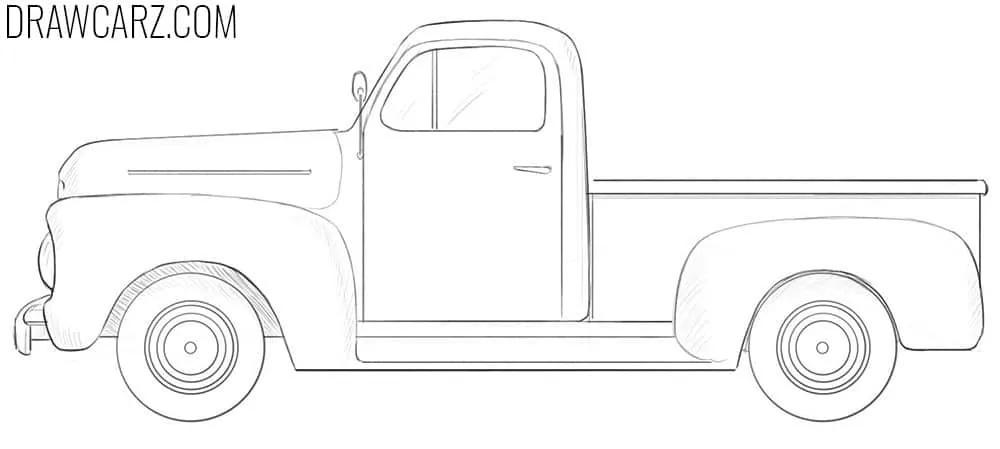
Step 8 – Add reflections and shadows to the classic truck
First, add shadows to the inner surfaces of the arches. Then continue adding shadows in lighter areas. Don’t forget to add some highlights to the windows and headlights.
Further old truck drawing practice
You can continue to add shadows and highlights to make the old Ford truck drawing more dimensional and realistic. In addition, visit our other guides from the Trucks category, where you will find a lot of interesting articles.
Old trucks have their own distinct style, atmosphere, and – without exaggeration – a certain sense of character that sets them apart, much like other classic vehicles.
The vintage Ford truck is no exception. In many ways, drawing an old Ford follows the same general principles as drawing an old Chevrolet, and both lessons are well suited for illustrating traditional American trucks.
For a more detailed understanding of how to draw trucks of different models, brands, and production years, make sure to visit our Trucks category. We update it regularly with new lessons and practical observations our team has accumulated over many years of studying vehicle design.
We also strongly recommend exploring our truck coloring pages collection, where we publish illustrations of both modern and classic trucks in this body style, presented in both detailed and simplified forms. These printables offer an excellent way to practice tone, color, and overall finishing techniques.


i love the tow truck
Thank you. We are very happy this tutorial was helpful.